B2B Demand Generation Strategy: How to Build a Predictable Pipeline in 2026
According to research from Demand Gen Report, the global B2B demand generation market reached $8 billion in 2024 and is projected to nearly double by 2033. In addition, Gartner’s latest CSO Sales & Marketing Alignment Guide, sales lead organizations that prioritize alignment with marketing are 3x more likely to exceed new customer acquisition targets.
Why?
Because nearly 70% of the B2B purchasing journey is completed online before a prospect ever speaks to a sales representative. That means by the time a buyer reaches your sales team, they’ve already formed an opinion, shaped entirely by your marketing.
For B2B companies wanting to grow, that’s either a significant risk or a significant opportunity. The difference comes down to whether your demand generation strategy is proactive and measurable, or reactive and scattered.
What is B2B Demand Generation?
Demand generation is the full-funnel strategy of creating awareness, nurturing interest, and converting that interest into qualified sales pipeline. It’s not just lead generation. It encompasses every touchpoint that moves a buyer from “never heard of you” to “ready to talk.”
In sales terms, demand generation is the work that identifies and creates your metrics (what success looks like for the buyer), surfaces the economic buyer’s priorities, and builds the case for your solution before a sales conversation even begins.
What separates companies with strong demand generation from those without:
- Weak demand generation: Random acts of marketing. Sporadic campaigns. Leads that don’t convert because sales and marketing aren’t aligned.
- Strong demand generation: A marketing engine or system that generates consistent pipeline, measurable CAC, and shortens sales cycles by pre-educating buyers. Investing in documenting a content marketing strategy that aligns with the entire buying process.
Is Your B2B Demand Generation Strategy Built on a Solid Foundation?
Before investing in campaigns, it is worth auditing whether your marketing foundation is ready to support demand generation at scale. At Pace Creative, we assess this through our 5 pillars of marketing maturity. Our framework diagnoses where your marketing system has gaps and what to prioritize first.
See the full framework breakdown in our B2B Marketing Consulting post.
A demand generation strategy without a strong product foundation is like filling a leaking funnel. Before investing in campaigns, take our Marketing Audit to identify which areas need attention first.
What Are the 5 Components of a High-Performing B2B Demand Generation Strategy?
1. ICP and Persona Alignment
The most common failure point in B2B demand gen is targeting too broadly. Your Ideal Customer Profile (ICP) defines the companies most likely to buy, grow, and stay. Your personas define the individuals who champion your solution internally.
In sales, this maps directly to identifying your economic buyer and champion. If you don’t know who you’re generating demand for, your campaigns will attract volume but not quality.
2. Content That Educates Decision-Makers, Not Just Fills Channels
According to The Insight Collective’s B2B Tech Buying Report, case studies are the most preferred content type among decision-makers (78%), followed by webinars (58%) and analyst reports (54%).
Your content strategy needs to align with what buyers actually consume at each stage of their decision process.
3. Multi-Channel Distribution
Demand generation doesn’t live on one channel.
High-performing B2B strategies combine organic SEO, paid media, email nurture, social selling, and events to reach buyers across their self-directed research journey.
According to Lead Forensics’ Guide to Multi-Channel Marketing, businesses using 4 or more digital channels outperform those using single or dual channels by 300%. Year-over-year, companies with a strong multi-channel approach also see a 7.5% decrease in cost per contact, making channel diversity not just a reach strategy, but a sustained cost efficiency advantage.
4. Marketing-to-Sales Handoff That Doesn’t Leak Pipeline
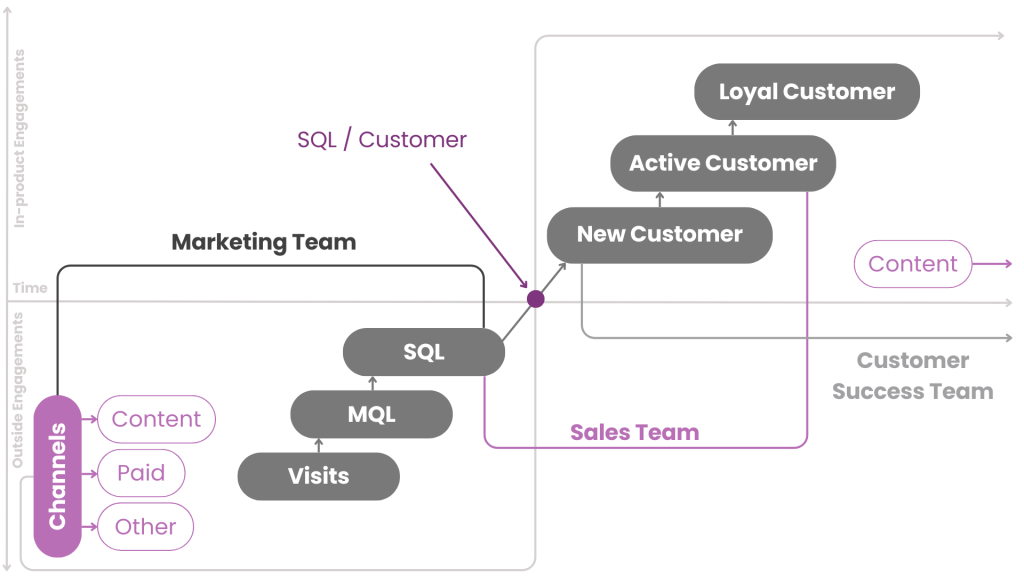
One of the biggest gaps in B2B demand generation is the handoff between marketing-qualified leads (MQLs) and sales. Without specific qualification criteria aligned to your sales process, pipeline leaks at the exact moment of highest intent. Define MQL criteria jointly with your sales team. Agree on what “ready to talk” looks like before any campaign launches, not after.
How Do You Measure B2B Demand Generation ROI?
The metrics that matter in demand generation are the ones that connect directly to revenue outcomes, not vanity metrics like impressions or follower counts.
Key demand generation metrics to track:
- Marketing-Qualified Leads (MQLs) and conversion rate to SQL: are your leads progressing?
- Customer Acquisition Cost (CAC): what does it cost to win a new customer?
- CAC Payback Period: how quickly does a new customer pay back the cost of acquiring them? Learn more: CAC Payback Period on B2B Marketing Budget
- Pipeline Velocity: how fast are deals moving through the funnel?
- ROAS and Attributed Revenue: which campaigns are generating real deals, not just clicks?
If these numbers aren’t visible to you today, that’s a MarTech maturity issue, your “Oil” pillar needs attention before scaling your performance spend.
Explore what good marketing measurement looks like in our B2B Marketing ROI tracking guide.
What Is the Difference Between Demand Generation and Lead Generation in B2B?
This is one of the most searched questions in the space and for good reason.
The two terms are often used interchangeably, but they describe very different strategies.
- Lead Generation is transactional: get a name and email in exchange for content. It creates contacts, not necessarily buyers.
- Demand Generation is strategic: build awareness, educate the market, and create the conditions in which your ICP recognizes they have a problem and that you solve it.
The most effective B2B programs combine both: demand gen fills the top of the funnel with the right people, lead gen captures them at the right time.
For a deeper dive, read our post on Demand Generation vs. Lead Generation.
How Does Marketing Maturity Affect the Quality of Your Demand Generation?
Most B2B companies operate at Level 1 or Level 2 demand generation maturity running sporadic campaigns without a consistent system. The result is unpredictable pipeline, heavy reliance on referrals, and a sales team that questions whether marketing is contributing.
Here’s what demand generation looks like at different maturity levels:
- Level 1 (Survival): Random acts of marketing. No attribution. Leads are unmeasured and inconsistent.
- Level 3 (Standardized): Predictable lead flow. Clear ROAS and attribution. Marketing and sales are beginning to align.
- Level 5 (Optimized): High-scale acquisition. Optimized LTV/CAC ratio. Demand generation is a revenue driver, not a support function.
Most growing B2B companies are working toward Level 3.
To understand where your marketing stands today, book a Marketing Audit with Pace Creative.
What Does It Take to Get B2B Demand Generation Right?
There are three areas that must be aligned for demand generation to produce consistent, scalable pipeline:
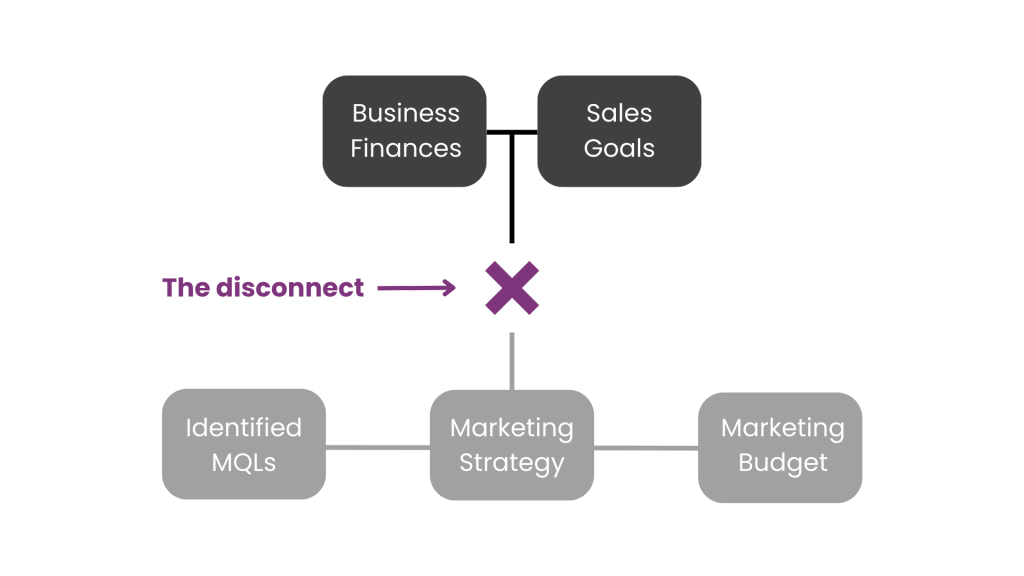
1. Marketing Budget Tied to Revenue Targets
There is a typically a disconnect between the sales projections and the marketing budget to support the marketing initiatives needed to support revenue growth.
A bottom-up forecasting approach — building budget from required pipeline and CAC targets backward — closes this gap. Without it, marketing spend is disconnected from the commercial plan.
2. Sales and Marketing Alignment
When evaluating vendors or assessing performance, the most common disconnect is between what marketing produces and what sales needs to close deals.
Salesforce research has consistently shown that a significant portion of sales professionals do not expect to meet quota — and misalignment with marketing is a root cause. Shared qualification criteria, joint pipeline reviews, and agreed MQL definitions are the operational fix.
3. The Right Marketing Skills and Team Structure
According to a Gartner report on high-tech CEO priorities, internal teams not having the right digital skills is one of the most urgent challenges to scale. Demand generation in 2026 requires expertise across SEO, paid media, marketing automation, content, and data analytics, a combination rarely found in a single hire.
When evaluating your team structure, the key variables are: stage of business maturity, business model, revenue target, and available marketing budget. These determine whether you need to hire, outsource, or embed a fractional marketing leadership model.
How Can Pace Creative Help You Build a B2B Demand Generation Engine?
Pace Creative is a B2B marketing consultancy specializing in connecting marketing investment to measurable revenue outcomes. We work with growth-stage companies, PE-backed businesses, and enterprise teams who need more than creative execution, they need a marketing system that drives pipeline.
Our approach is built on the 5-pillar Marketing Maturity Flywheel. We start with an audit of where you are, identify which pillars are creating drag on your demand generation, and build a prioritized roadmap to get you to predictable, scalable growth.
If you’re investing in marketing and not seeing pipeline, the issue is usually structural, not creative.
Download our eBook: How to Choose the Right Marketing Agency to understand what to look for when evaluating your marketing investment.
Ready to build a demand generation engine that actually works? Talk to our team.

What Are Website Optimization Services and How Do They Drive B2B Growth?
We work with many technical leaders that approach digital transformation the same way they approach engineering projects: focus on the output. A faster website. Better SEO rank... What Is B2B Marketing Consulting for Revenue Growth?
According to Forrester’s 2025 B2B Marketing and Sales Predictions, B2B leaders must shift focus from activity-based marketing to revenue process improvement, prioritizin...